

Family and Intimate Partner Violence (IPV) Course for Radiographers
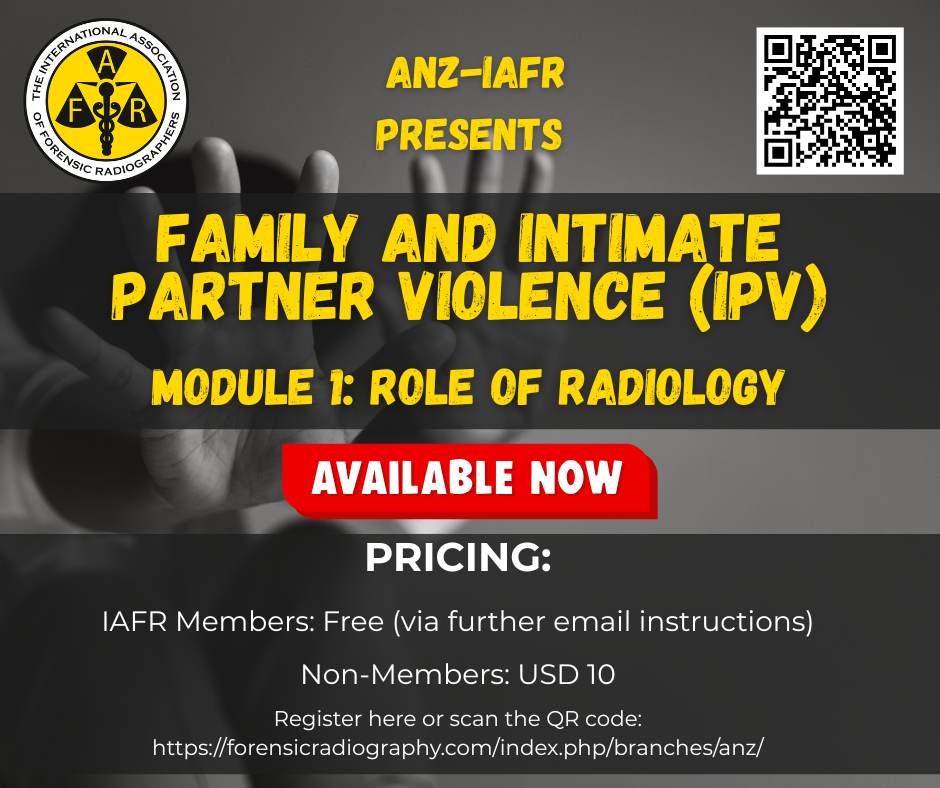
TASTER SESSION LIVE NOW!
Who
Dr Bharti Khurana is an Associate Professor of Radiology at Harvard Medical School and an Emergency Radiologist at Brigham and Women’s Hospital, USA. She is the Founder and Director of the Trauma Imaging Research and Innovation Center (TIRIC) and an NIH-funded physician-scientist specialising in trauma imaging, family and intimate partner violence, and the application of machine-learning tools to support early recognition of injury patterns.
Dr Khurana’s clinical and research expertise aligns directly with the recently updated MRPBA Professional Capabilities, which now emphasise the responsibility of Medical Radiation Practitioners to recognise, respond to, and act on suspected family, domestic, and sexual violence. Her work focuses on accurate image interpretation, medicolegal documentation, and the critical role radiographers play in identifying non-accidental injury within emergency and acute care settings.
The ANZ branch of the International Association of Forensic Radiographers (IAFR) are honoured to have Dr Khurana assist in developing modules for a new course which includes Intimate Partner Violence and Safeguarding of Adults. This course is designed to support MRPs in meeting contemporary professional, ethical, and regulatory expectations through practical, evidence-based learning led by an internationally recognised expert in forensic and trauma imaging. This course will supplement the IAFR’s existing course and practical workshop on the Radiological Investigation of Suspected Physical Abuse of Children (SPA/NAI).
Module 1: Role of Radiology
This first module will introduce the learner to the core concepts of intimate partner violence (IPV), emphasising its widespread prevalence across all socioeconomic, educational, racial, and cultural backgrounds. Learners will learn how radiology can play a pivotal role in detection by identifying injury patterns that are disproportionately associated with IPV. These include characteristic fracture types, facial and extremity injuries, old or healing fractures. The module will highlight how careful review of both current and prior imaging can uncover subtle but important clues that may otherwise go unnoticed.
By the end of this module, the learner will understand the epidemiology of IPV, the clinical and public health importance of early recognition, and the unique opportunity radiologists and radiographers have to identify at-risk patients and help connect them with appropriate support services.